PRESS RELEASE - Official clarification from the German authorities: no police alert against me
I deemed it appropriate to formally request clarification from the competent German authorities (Bundeskriminalamt) regarding the possible existence of a police alert against me in the "Schengen Information System," which the Italian authorities had referenced to justify the home check I underwent at the end of March.
The response received from the German authorities confirms that, as of now, there are no alerts registered against me.
In recent months, false and defamatory claims have circulated according to which "Germany is supposedly looking for me." This response fully clarifies the situation and definitively refutes these baseless rumors, which have almost always been used in a seriously instrumental way to target me personally and my political activity.
I reserve the right to protect my reputation and my rights before every competent authority against anyone who continues to spread untrue information.
Anger at ‘send them back’ chants by rightwing MEPs after EU migration law vote
Other lawmakers respond with ‘shame on you’ in heated confrontation over passing of plan to increase deportations
Rightwing MEPs have come under fire after they celebrated a vote aimed at increasing deportations across the EU with chants of “send them back”, leading other lawmakers to respond with cries of “shame on you”.
The heated confrontation in the European parliament came on Wednesday after lawmakers voted 418 to 218 to approve controversial measures aimed at increasing deportations of undocumented people.
The overhaul has been widely criticised by rights groups including Amnesty International France, which this week described the plans as “absurd, cruel and discriminatory”, and 16 UN experts, who recently outlined more than a dozen ways in which the rules could contravene international human rights.
The plans include measures under which people could be detained for up to two years or sent to offshore centres that have been described as potential “human rights black holes”, while also allowing ICE-style immigration enforcement to gain a foothold in Europe.On Wednesday, as an alliance of mostly centre-right and far-right lawmakers joined forces to back the plans, the approval was met with hearty applause in the parliament. Many rightwing MEPs jumped to their feet, a handful of them pumping their fists in the air as they chanted “send them back”.
Seconds later, a second chorus, this time from politicians on the centre-left and left, responded by chanting “shame on you”.
The moment underscored the deep divisions in the European parliament, after elections in 2024 led to a record number of nationalist and far-right MEPs.
The far right’s celebration of the vote was swiftly condemned. Javi López, a Socialist and vice-president of the European parliament, described the plenary session as “disgraceful”. Writing on social media, he added: “As if people were parcels. Families. Minors. Deported to third countries. This is the Europe they are imposing.”
Manus Carlisle, who manages communication for the Left group in parliament, said it was a “dark moment that is likely to go down in EU history”, while the French Renew MEP Laurence Farreng said it was a moment in which “the far right is screaming its hatred”.
Ilaria Salis, an Italian MEP for the Green and Left Alliance who made headlines in 2023 after she was arrested at a counter-demonstration to a neo-Nazi rally in Budapest, described it as “horrifying”.
“The human depravity of a certain political faction truly seems to know no bounds: rejoicing over the deportation of innocent people,” she wrote on social media. “Rejoicing not because someone’s life is improving, but because someone else’s – considered different, inferior, less deserving of rights – is getting worse.”
Salis said this was how fascism crept into democratic institutions. “Today, migrants and racialised people are primarily in the crosshairs – the quintessential scapegoats of the right wing’s vulgar propaganda,” she said. “But tomorrow, if we continue at this pace, it will be the turn of more and more people. It will be the working class, activists, and dissidents – and eventually anyone who does not conform to the order they seek to impose.”
The Socialists and Democrats group warned that the far-right chants were just the first step. “‘Send them back’ is not a migration policy. It is a slogan of fear that paves the way for a much darker future,” it said on social media.
Others, such as Herbert Kickl, the leader of Austria’s far-right Freedom party (FPÖ), welcomed the moment. Kickl, who in the last elections campaigned using the “people’s chancellor” moniker once used to describe the Austrian-born Adolf Hitler, characterised it as a show of force for rightwing lawmakers.
“The fact that ‘send them back’ was shouted in the plenary hall shows one thing above all: pressure from the right is having an effect. An important step, but by no means the end of the road,” he said on social media.
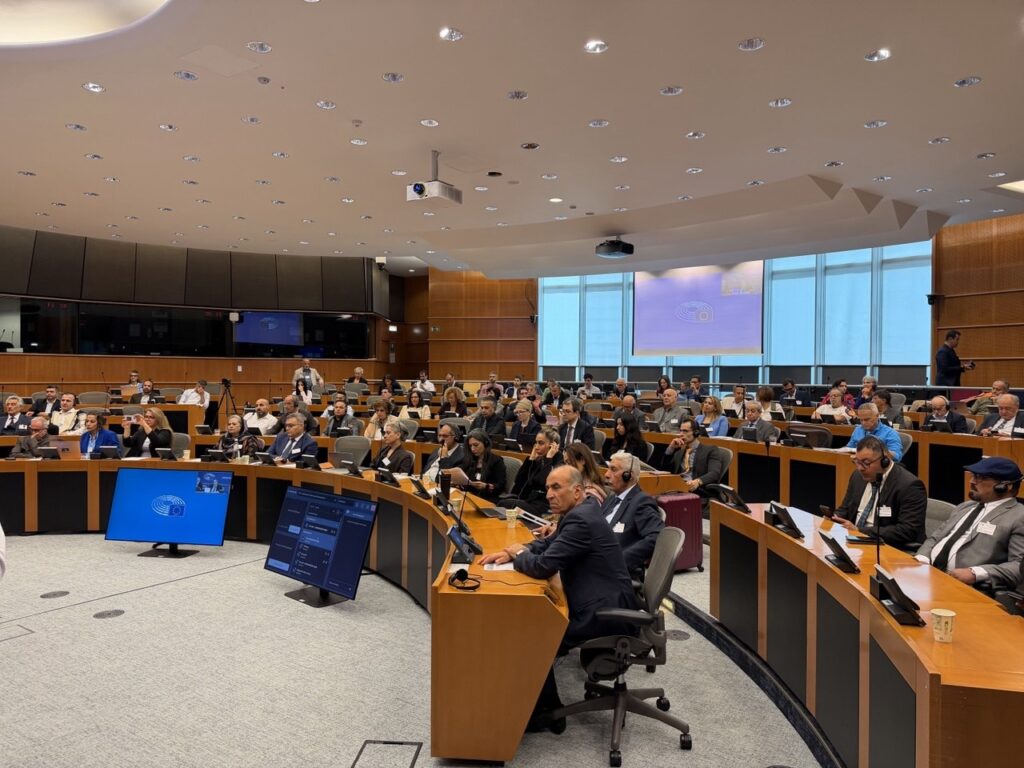
I am honoured to be here today to express my support for the construction of a democratic Iran, and for all those in Iran—women, students, workers, activists, political prisoners, and the many peoples and minorities of the country—who continue to struggle for freedom, equality, and democracy under extremely difficult conditions.
I would like to say something on a personal and political level.
For me, the Jin, Jiyan, Azadî movement has been a tremendous source of inspiration.
The courage shown by the women and youth of Iran resonated far beyond the country's borders. It resonated in Italy, it resonated across Europe, and it inspired many people who saw in that movement not only a struggle against oppression, but also a vision of a different society based on dignity, freedom, and democratic coexistence.
For many years, we in Italy have denounced the repression carried out by the Iranian regime against women, students, minorities, trade unionists, journalists, human rights defenders, and political activists.
We have stood against executions, arbitrary detention, discrimination, and the systematic denial of fundamental freedoms.
At the same time, I would like to share a more recent concern regarding the political context that has emerged after the recent Israeli and American attacks against Iran—attacks that I strongly condemn because of their imperial nature. Neither Israel nor the United States are bringing liberation to Iran. They are pursuing their own geopolitical interests, and their bombs will not bring democracy or justice to the Iranian people.
In my country, mobilizations and public debates concerning Iran have increasingly been dominated by right-wing and far-right forces.
This is happening for several reasons.
First, because large parts of the Iranian diaspora in Italy have developed close political ties with monarchist forces, particularly those associated with the son of the former Shah.
Second, because support for regime change in Iran is often framed within a broader geopolitical alignment with Israel and the United States—an alignment that right-wing forces in Italy, and across Europe, actively embrace and promote.
And third, because solidarity with the Iranian people is too often instrumentalized to advance anti-Muslim and anti-Islamic narratives that have nothing to do with democracy, human rights, or genuine solidarity.
But there is another problem that we must address honestly.
Today, it is no longer uncommon to see the flag of the Islamic Republic displayed in some demonstrations in Europe against the genocide in Palestine.
For certain sectors of the left and social movements, the Iranian regime is increasingly perceived as an anti-imperialist actor simply because it opposes Israel and the United States. From this perspective, the crimes, repression, and authoritarian nature of the regime are sometimes minimized or ignored.
I obviously do not share this position.
And I believe that both of these tendencies—the instrumentalization of the Iranian struggle by the right, and the idealization of the Iranian regime by parts of the left—ultimately weaken international solidarity with the democratic aspirations of the Iranian people.
This situation creates a difficult challenge for all of us.
As Iranian and Kurdish comrades explained during a discussion on a new internationalism that we organized yesterday here in the European Parliament with The Left Group, the democratic opposition in Iran is forced to resist on two fronts simultaneously.
On one side, there is resistance against war, foreign aggression, and imperial domination—the external threat.
On the other side, there is resistance against authoritarianism, repression, and the Islamic Republic itself—the internal threat.
To stand on both fronts at the same time is extraordinarily difficult.
It requires political clarity, courage, and consistency.
And it deserves our deepest solidarity.
Because the people fighting for democracy in Iran should not be forced to choose between dictatorship and war.
They should not be forced to choose between authoritarian rule and foreign imperialist intervention.
They should not be forced to choose between one form of oppression and another.
Our task, as democrats and internationalists, is to support a third path: a path based on self-determination, democracy, social justice, peace, and coexistence among the diverse peoples and communities of Iran.
This is why initiatives like today's conference are so important.
We need to give new energy, new visibility, and stronger international support to the project of a democratic Iran: an Iran that is free, pluralistic, democratic, and united through diversity rather than imposed uniformity; an Iran where different nations, communities, cultures, and political traditions can participate equally in shaping a common future.
I know that this is not an easy road.
But history has shown us many times that authoritarian regimes can appear strong until the day they suddenly are not.
What ultimately matters is whether democratic forces are organized, connected, visible, and supported internationally when that moment arrives.
For this reason, I want to thank all of you for your commitment, your courage, and your efforts.
And I want to conclude by expressing my full solidarity—and the solidarity of many people across Italy and Europe—with all those who continue to struggle for a democratic future for Iran.
Thank you.
An EU future for the Western Balkans (joint debate)
Mr President, honourable colleagues, thanks to the Flamingo Movement, Albania has been showing its best face in recent weeks and is pointing the way forward for the whole of Europe. Hundreds of thousands of people have taken to the streets against a government and an opposition that are equally incapable of representing and defending the interests of ordinary people. Their message is simple and powerful: Albania is not for sale. It is not for sale to oligarchs and speculators, it is not for sale to Ivanka Trump and Jared Kushner, it is not for sale to those who believe that money can buy everything — the land, nature, and even democracy itself.
What we are witnessing is not merely an environmentalist mobilisation; it is a battle for popular sovereignty. It is the assertion of a people's right to determine their own future, without the economic interests of the ruling classes dictating the agenda.
For this reason, Europe ought to pay close attention to what is happening in Albania. There is no better guarantee for the path towards accession to the European Union than a people who are alive, aware, and capable of mobilising against predatory capitalism, in defence of justice, the common good, and freedom.
Situation of fundamental rights in the European Union in 2024 and 2025 (debate)
Mr President, honourable Members, fundamental rights are increasingly under attack in Europe.
The classist and authoritarian agenda of the far right is plain to see. Yet in times of crisis and war, even democratic forces end up accepting too many downward compromises. For us, by contrast, the rights of each and every person are non-negotiable: they are our red line, our barricade.
To those who justify the curtailment of rights in the name of security, we reply that security without rights produces subjects, not citizens. And subjects are never truly safe. To those who set social rights against civil rights, we say this is a mistake. It is not a zero-sum game, but a struggle in which each strengthens the other. And to those who claim that rights are for some, we reiterate that either they belong to everyone or they are called privileges.
Defending acquired rights and winning new ones is the same struggle—our struggle. They want us to be subjects of the nation. We want to be citizens of the world.
And how many rights we have depends on us, on our ability to fight together. The history of democracy is a history of rights won: it is up to us to continue writing it.
EP Plenary Session - Housing crisis in the European Union with the aim of proposing solutions for decent, sustainable and affordable housing
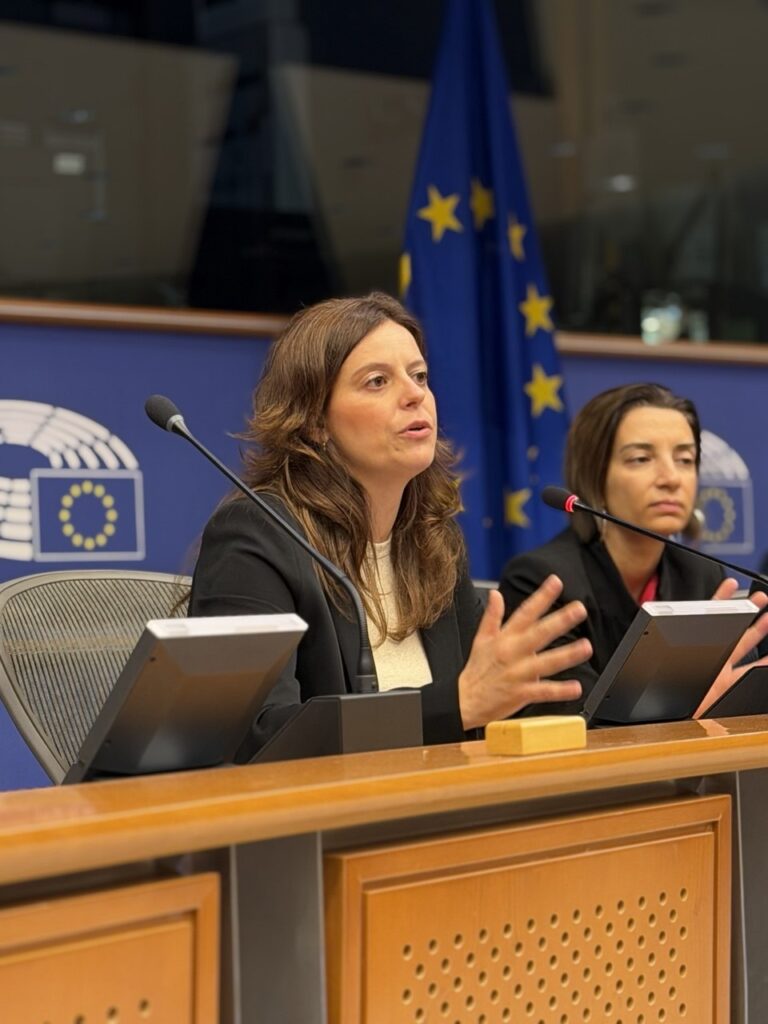
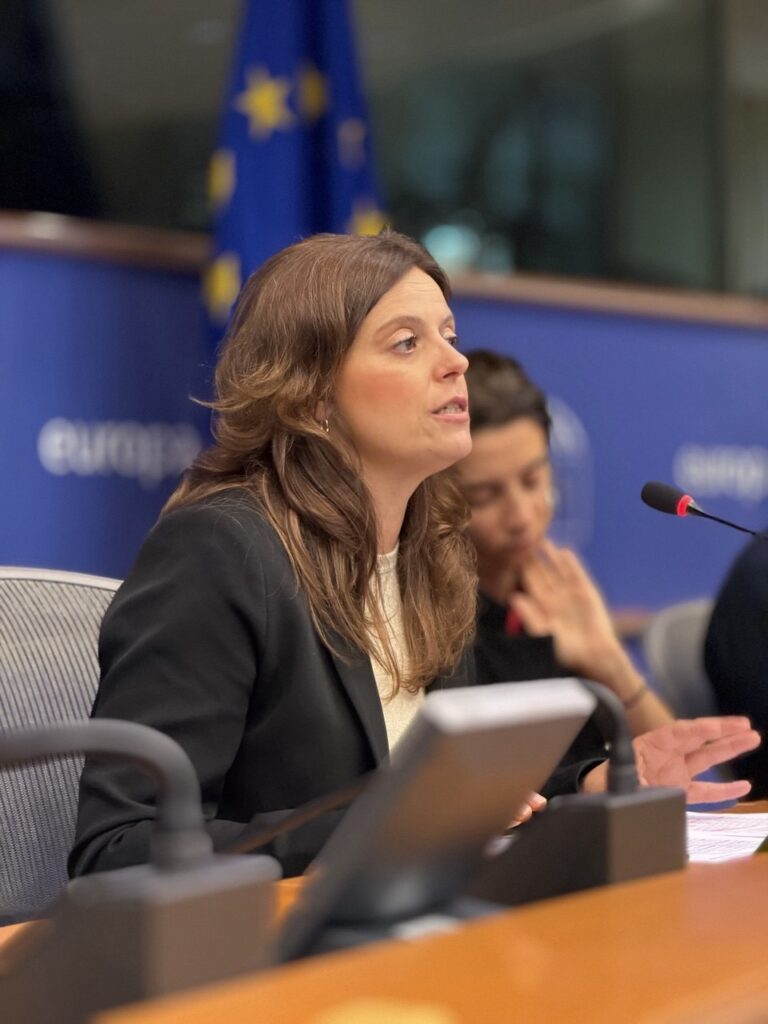
Madam President, honourable colleagues, housing is the foundation of rights. Without a home, everything else becomes fragile and precarious: security, work, health, education, and even people’s dignity. Yet today, in Europe — and certainly in Italy — too many people do not have a home; too many families struggle every month to pay their rent or mortgage; too many workers cannot afford to live in the cities where they work.
The housing crisis is now plain for all to see, and it provokes anger as well as shame. We live in wealthy and advanced societies: how is it possible that we cannot even guarantee decent housing for everyone? This happens when economic interests are placed before people’s needs, when the market is left without limits.
Public authorities, if they are to retain any meaning for citizens, must intervene. The solutions exist, but they require political will: investing public resources and taxing large fortunes.
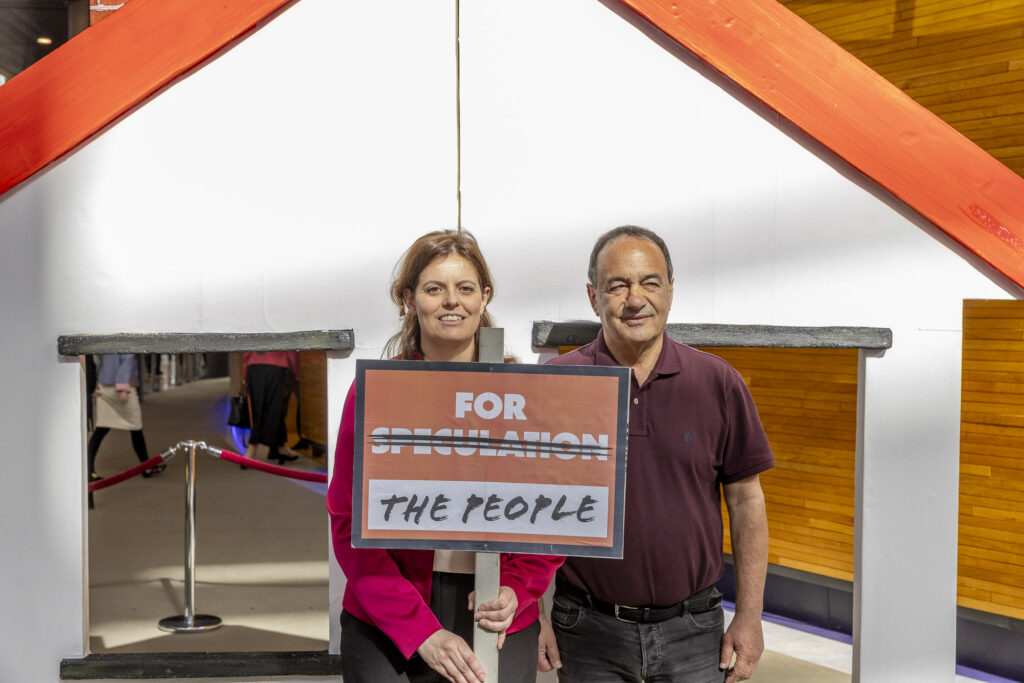
We call for a major public housing plan, limits on short-term tourist rentals, and measures to tackle vacant homes and property speculation.
On the Housing Crisis, Europe Has Chosen the Wrong Side Today
Today, the European Parliament approved the report on the housing crisis, which is now spreading across the continent and primarily affecting working-class people — but increasingly also the middle class.
We voted firmly AGAINST.
Because the proposed “solutions” do not address the root causes of the crisis. On the contrary, they reinforce the same logics that created it:
Free market
Real estate speculation
Financialisation
We tried to improve the text.
Together with my colleagues in The Left, we submitted 35 amendments to truly change the approach of the report. But most of our proposals — reasonable, even moderate — were rejected.
Here are some examples:
Amendment 30: Calls on Member States to discourage speculative accumulation of empty housing through fiscal and regulatory measures.
Amendment 32: Highlights the need to prevent criminalisation of occupation of vacant housing, especially public property and buildings owned by individuals with multiple residential units, where occupation is carried out by people unable to afford housing at prevailing market rates; invites Member States to encourage renovation of abandoned or deliberately neglected buildings.
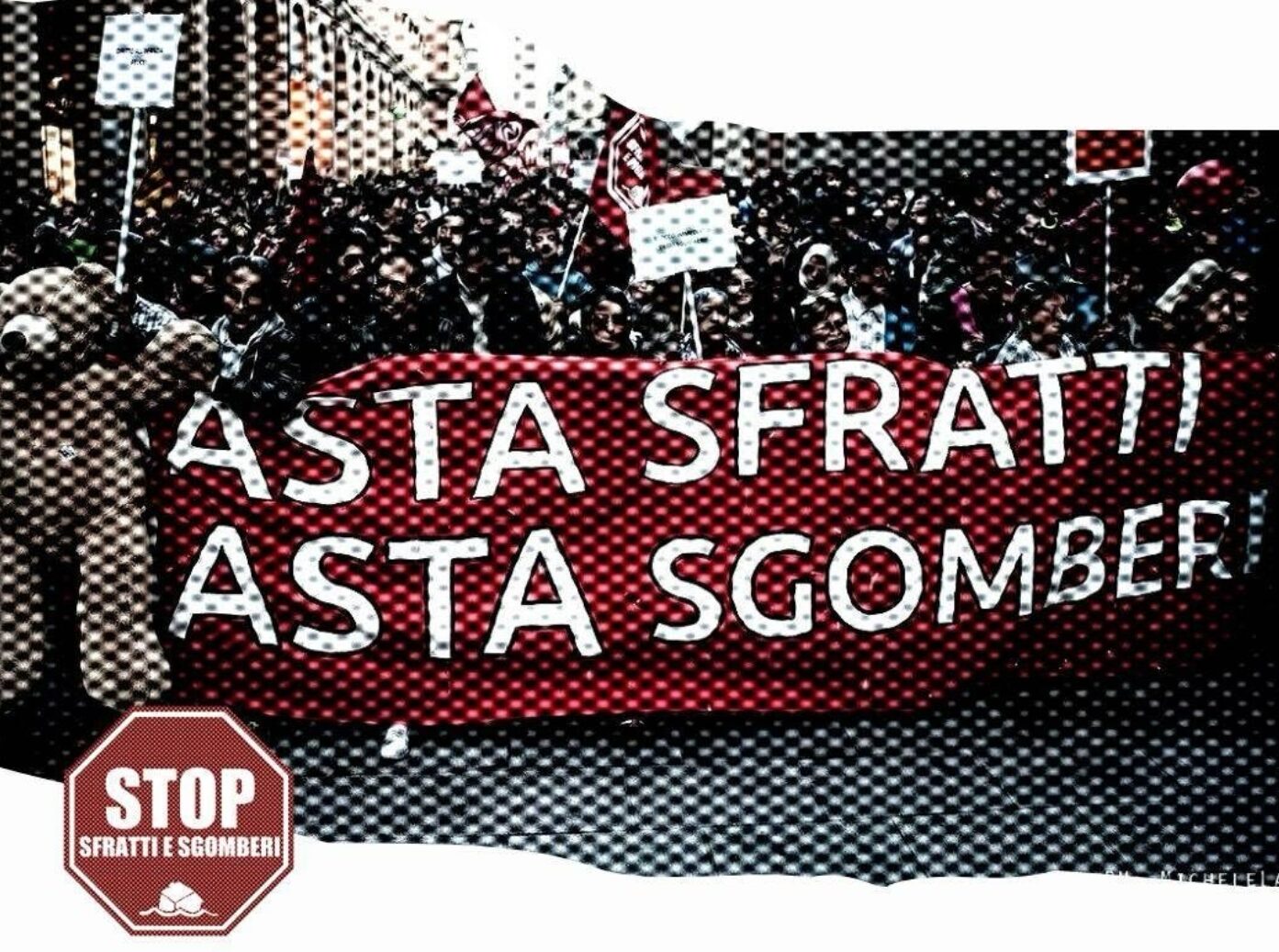
Amendment 34: Urges Member States to implement protection measures for people unable to pay rent, including banning eviction for non-payment where no dignified alternative housing exists; calls for special protection to ensure minors are not evicted and for a European winter eviction moratorium.
Amendment 38: Requests legal and social safeguards to fully protect primary residences, including a general moratorium on mortgage foreclosures, forced evictions, and auctions.
Amendment 40: Calls on Member States to guarantee specific quotas for women fleeing domestic violence, sexual exploitation, or human trafficking in social and public housing programmes and integrated housing support services.
Amendment 41: Stresses the importance of investing in public housing capable of influencing overall market conditions and urges the Commission to propose a European plan for the construction of public and social housing to reduce inequalities.
Amendment 42: States that no housing unit built entirely or partially with public funds, or which has received financial support from public resources regardless of amount, should be sold, transferred, or otherwise placed on the private housing market.
Amendment 43: Invites the Commission to propose a new directive to regulate short-term rentals fairly.
Amendment 44: Calls on Member States and local authorities to use all existing tools to combat abuses linked to “Airbnb-isation”, particularly through primary residence zones and maximum quotas for units for tourist rentals in high-demand areas.
Amendment 47: Invites the Commission to propose a binding European framework to curb housing and real estate speculation and prevent excessive rent increases.
This was a missed opportunity.
Real estate lobbyists continue to set the agenda for European housing policy. To achieve real change, we must build a counter-lobby for the right to housing. We need to assert the rights and organise the strength of everyone who is paying the price of the housing crisis.
Housing is a right, not a commodity or a financial asset, and certainly not a speculative good.
Housing for all, poverty for none!
Gender pay and pension gap in the EU: state of play, challenges and the way forward, and developing guidelines for the better evaluation and fairer remuneration of work in female-dominated sectors (debate)
Mr President, honourable colleagues,
In Italy, despite increasingly higher levels of education — often surpassing those of men — women continue to participate less in the labour market, earn less, and rarely hold managerial positions.
Meanwhile, they carry out the majority of domestic and care work: invisible, unpaid, and often unrecognised even by those who benefit from it. Men, on the other hand, are expected to do the paid work that guarantees autonomy, independence, and power.
This is not the result of free choice. It is the outcome of an ancient and persistent system of power: patriarchy. Women have fought, and continue to fight, to change this state of affairs, and progress is being made. But it still meets too many misogynist obstacles, both inside and outside institutions.
A recent example is the decision by the majority of Giorgia Meloni’s government to reject the proposal for equal parental leave. An embarrassing choice — one that speaks volumes about today’s right-wing government: radically hostile to women’s emancipation and gender equality.
It is true: having a woman at the head of government is not enough to advance policies in favour of women, especially if she insists on behaving like any other man.
One-minute speeches on points of political relevance
Mr President, honourable colleagues,
For over 60 years, Cuba has lived under a United States embargo — a criminal embargo that has already caused too much suffering to the population and has prevented the free development of the island.
Today, however, we are witnessing a new and dangerous escalation: since 29 January, the Trump administration has been attempting to strangle this country definitively with an unprecedented energy blockade. The consequences are severe. The humanitarian crisis worsens every day: blackouts, shortages of essential goods, hospitals without medicines.
We are not talking about abstract geopolitical disputes: we are talking about the real lives of 11 million men, women, and children. This is a collective punishment inflicted on an entire people, a practice that is illegal under international law.
But we know this: for Trump, international law is worthless, and he will do everything in his power to suffocate the freedom and self-determination of the Cuban people, guilty only of living in what he considers his own backyard.
And in the face of this arrogance and inhumanity, Europe remains silent once again. A shameful, complicit, cowardly silence. What more must happen before we understand that the United States represents a danger to all humanity?
Solidarity with the Cuban people.
Committee on Civil Liberties, Justice and Home Affairs Extraordinary meeting 09.03.2026
Utilizziamo i cookie per assicurarti la migliore esperienza sul nostro sito web. Se continui a utilizzare questo sito, daremo per scontato che tu ne sia felice.Ok